
Sodas, juices, iced teas, energy drinks — there are loads of alternatives to plain water. That fizzy, sweet sip after a long day can feel like a moment of comfort, and that’s no accident.
The food and beverage industry has worked for decades to combine sugar, artificial flavoring, and fizz to create craveable products. They’re cheerfully packaged, heavily marketed, and stocked in every supermarket.
But what we drink can make a significant difference to our health. Many soft drinks, marketed as healthy and hydrating, contain more sugar than our body needs in a day.
Learn why some soft drinks may affect your well-being and how to make more informed beverage choices.
Are Soft Drinks Safe To Have?
Generally, yes. A lot of soft, carbonated drinks are like sparkling water with natural fruit flavours, kombucha, and drinks with no added or artificial sugars are perfectly safe for your health.
But the dangers lurk in some soft drink ingredient lists.
Many popular soft drinks are loaded with added sugars, acids, preservatives, and caffeine — way more than your body needs. They’re also heavily processed to stay fresh longer and keep you coming back for more.
Compare the ingredient list of a healthy soft drink to that of a sugar-sweetened one and you’ll see the difference:
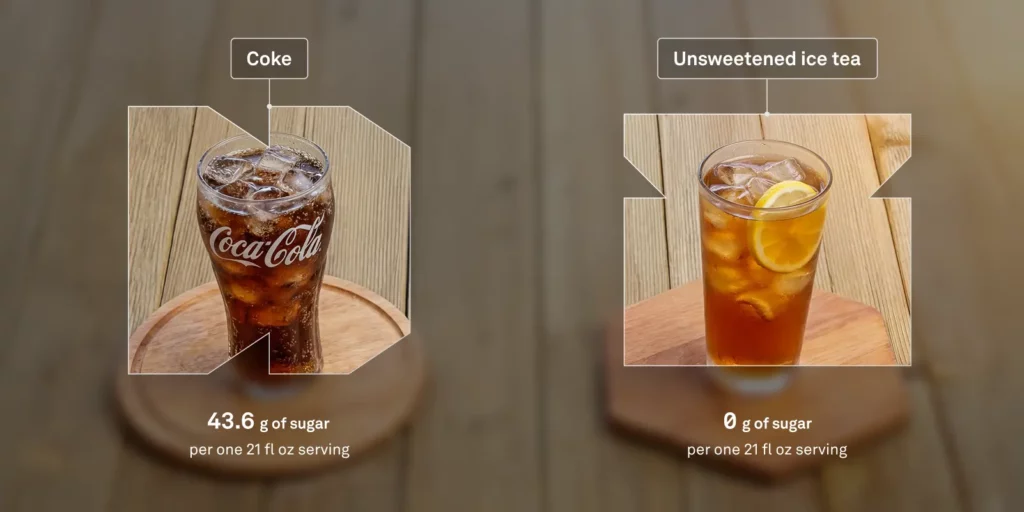
Source: US Department of Agriculture
When making soft drinks, many beverage companies swap natural nutrients for extra sugar to make up for flavor, lost during processing.
A 12-ounce soda can has about 10 teaspoons of added sugar. That’s roughly double the healthy daily intake for women and more than what men should have in a day.
Soft drinks with extra high sugar content are classified as sugar-sweetened beverages (SSBs), and they are not safe to drink in large quantities.
What are Sugar-Sweetened Beverages?
Sugar-sweetened beverages are drinks with added sugars, such as soda, fruit punches, energy drinks, or sweetened teas. They taste great, definitely. But nutritionally? They don’t bring much besides extra calories.
Popular sugar-sweetened beverage examples:
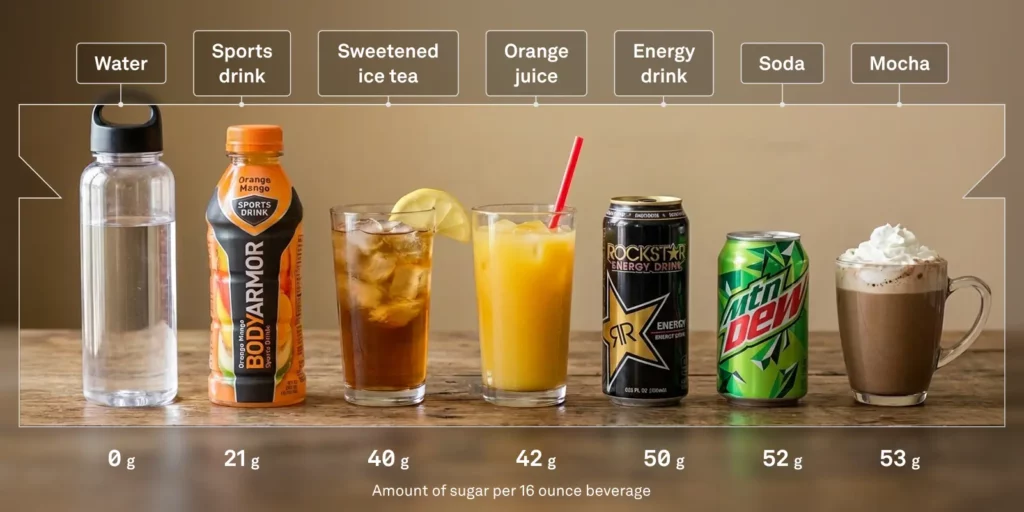
Source: San Benito County Health & Human Service Agency
About 63% of teens and 49% of adults have at least one sugary drink every day.
If saying no feels hard, it’s because these drinks are made to make you want more.
Manufacturers formulate these drinks to encourage repeat consumption. High sugar levels tickle your brain’s reward centers, creating that instant hit of pleasure. The fizz and slight acidity also give a satisfying kick. And caffeine, found in most energy drinks, adds a burst of alertness that increases the craving.
Yet, drinking sugar-sweetened beverages every day may contribute to health problems over time.
Why Are Soft Drinks Bad for You?
Daily intake of sugar-sweetened beverages may affect your metabolism.
The body absorbs liquid sugar very quickly, causing fast spikes in blood sugar and insulin levels. Over time, these frequent swings may contribute to conditions like Type 2 diabetes or heart disease.
Yet, food companies don’t make it easy to spot the problem. Added sugars often hide behind “healthy-sounding” ingredients like:
- Honey
- Agave
- Cane sugar
- Coconut sugar
- Fruit juice concentrate
These ingredients may sound more “natural,” but your body doesn’t see the difference. All types of consumed sugar are broken down into glucose and fructose. The body must work harder to process glucose and fructose. Over time, that constant effort can affect your health.
Occasional soda consumption is unlikely to cause harm, but drinking sugar-sweetened beverages daily can increase strain on the body over time.
Here are some well-documented, harmful effects of soft drinks on the human body:
- More frequent mood swings and energy crashes
- Disrupted metabolism and nutrient balance
- Damaged tooth enamel and higher cavity risk
- Faster weight gain and higher insulin resistance
- Fat buildup and inflammation in the liver
- Plaque buildup in arteries increases stroke risks
The Harmful Effects of Sugar-Sweetened Beverages
Sugary soft drinks provide quick thirst quenching and instant enjoyment, but understanding their broader effects is important too.
Over time, that steady stream of added sugar can throw your body off balance, interfering with how it manages energy, stores fat, and regulates mood.
Research consistently shows that high consumption of sugary, carbonated drinks is linked to diabetes, liver issues, and heart disease.
Here’s exactly how these types of soft drinks are bad for you — the knowledge that helps you make more informed choices.
Type 2 Diabetes
Out of all the health risks linked to sugary drink consumption, Type 2 diabetes risks are the most well-documented.
Number of Type 2 diabetes cases, linked to high SSB intake among adults for 20+ years
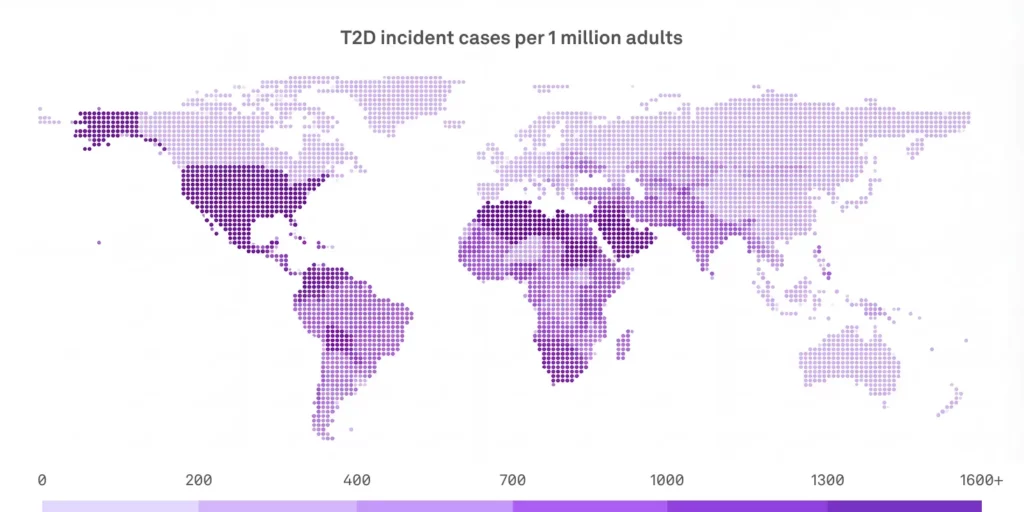
Source: Nature Medicine
Research published in Nature found that people who drink two or more sugary beverages daily have a 41% higher likelihood of developing Type 2 diabetes compared to those who rarely drink them. Even one extra serving a day can raise that risk by 25-30%.
Higher risks are linked to faster sugar absorption.
Liquid sugar goes straight into your bloodstream. That drives your blood sugar and insulin levels up. The pancreas works harder to manage the sugar rush, but constant strain eventually makes the body less responsive to insulin.
Sadly, higher insulin resistance is the first step toward potentially developing Type 2 diabetes.
Dental Caries
Sugary drinks can also affect your oral health.
Each sip bathes the mouth in sugar and acid, creating the perfect environment for bacteria to multiply. As these bacteria release acid, the mouth’s pH drops, gradually wearing away enamel and weakening teeth.
On average, people who drink a lot of sugary beverages have a 57% higher risk of cavities and more than twice the risk of tooth erosion.
And it’s not just soda that’s bad for your teeth. Sports drinks, fruit punches, and sweetened teas also have highly acidic ingredients, which wear down the enamel.
If you sip on such drinks during the day, the damage only gets worse. Your mouth doesn’t get enough “rest” time to normalize pH levels. And brushing right after can make things worse by spreading the acid deeper.
A more helpful approach is to rinse with water and wait for about 15 minutes before brushing your teeth.
Metabolic Dysfunctional-Associated Steatotic Liver Disease (MASLD)
Behind this large acronym hides a common condition, once called fatty liver disease. High consumption of sugar often causes the liver to store more fat than it can process.
Over time, the fat buildup inside liver cells causes swelling and makes it harder for the organ to do its job. Tiny scars form in the healthy tissue, which are the early signs of MASLD, formerly also known as non-alcoholic fatty liver disease (NAFLD).
MASLD cases have tripled since the 1990s, and more than half of Americans may be affected by 2040.
Sugary drinks are one contributor to this. Research shows that people who drink seven or more sweetened beverages a week have a 53% higher risk of developing NAFLD. Even one to six servings a week can raise that risk by more than 25%.
Fructose, a type of sugar often found in soft drinks, is a key part of the problem. The liver turns excess fructose into fat deposits. Over time, these can trigger swelling and scarring.
However, the liver can also recover. Replacing daily sodas with water, sparkling water, or unsweetened tea helps it rest and repair from earlier strain.
Cardiovascular Disease
Regular intake of sugary beverages can affect the heart and blood system function, too.
High sugar consumption may increase blood pressure and cause organ inflammation, placing extra demand on the cardiovascular system. Also, excessive sugars promote the buildup of plaque in arteries, leading to slower blood flow and a higher risk of stroke or heart attack.
One study found that women who drank one or more sugar-sweetened beverages per day had a 19% higher risk of heart disease and a 26% higher risk of undergoing surgical procedures.
The better news? Replacing one daily serving of soda with water, coffee, or tea reduced the risk of heart disease and premature death by 2 to 10%.
Beyond the Body, Sugary Drinks Also Impact Mental Well-being
Sugary drinks do not just affect the body. They can also influence mood and stress regulation.
High sugar intake can disrupt the balance of cortisol, the hormone that helps the body handle stress. It also promotes inflammation and alters the gut microbiome, both of which play a role in mood regulation.
Over time, these changes can make it harder for the brain to maintain emotional balance, which can contribute to irritability in adults and make emotional regulation harder for children.
Sugary beverages have high fructose content. Fructose (or fruit sugar) isn’t well absorbed by our body in high quantities. Researchers found a link between poor fructose absorption and several depression risk factors, such as decreased mood-boosting hormone production.
Researchers at the CDC further investigated this matter by observing people who drink sugary drinks daily. Among them, 26% more likely to report poor mental health. More research, based on data from the National Health and Nutrition Examination Survey, also found that higher daily sugar consumption was correlated with a 28% greater risk of depression.
Because many added sugars in the diet come from sweetened drinks, reducing intake may help support mental and emotional well-being.
Choosing Safer Soda Alternatives
Cutting back on sugary drinks doesn’t mean you have to only drink plain water all the time. No one does. But there are ways to enjoy bubbles and flavor without consuming tons of added sugar.
How about mixing sparkling water with a dash of citrus or infusing it with some berries? Now that’s fancy and healthy. Or steep a herbal tea, chill it, then add a splash of real fruit juice. That’s delicious too.
Even small changes make a difference. Replacing one soda a day with a glass of water gives you better hydration and can improve your overall well-being.
This article is for educational purposes only and does not constitute medical advice. Individual nutritional needs vary. Please consult a qualified healthcare professional for personalized guidance.