
Much of the food that fills American kitchens looks ordinary, even wholesome. Yet behind the bright packaging and familiar flavors hide some real health risks.
Ultra-processed foods now make up nearly 60% of the average American’s daily calories, and up to 70% for children, according to Stanford researchers.
The problem isn’t just convenience or habit. Food companies have spent decades perfecting what scientists call the “bliss point” — the precise mix of sugar, salt, and fat engineered to make products irresistible. That combination triggers maximum dopamine release in the brain, fueling cravings and overconsumption.
Some ultra-processed ingredients are also linked to real health risks — organ damage, metabolic disease, heart problems, and even cancer.
In this guide, we’ll look at ten of the most common ultra-processed foods in the American diet — and what to eat instead if you want to eat cleaner without giving up convenience.
The List of Ultra-Processed Foods to Avoid in Your Diet
If your goal is to have a long, healthy life, here are the 10 worst ultra-processed foods you should try to reduce in your diet:
- Processed Meats
- Sugary Soft Drinks and Energy Drinks
- Packaged Sweet Snacks
- Fast Food Burgers, Nuggets and Breakfast Sandwiches
- Frozen “TV Dinners” and Microwave Meals
- Instant Noodles and Boxed Mac & Cheese
- Sweetened and Flavored Yogurts, “Protein” Dairy Cups
- Ultra-Processed Bread and Buns
- Plant-Based Fake Meats
- Protein Bars, Shakes and Meal Replacement Drinks
Let’s review each of them in more detail.
1. Processed Meats
Processed meat is any meat that has undergone smoking, curing, salting, or the addition of any chemical preservatives before landing on your table.
These include common staples of the standard American diet, like:
- Bacon
- Corned beef
- Chorizo
- Deli slices
- Hams
- Hot dogs
- Jerky
- Pastrami
- Pate
- Pepperoni
- Roast beef
- Salami
- Sausage
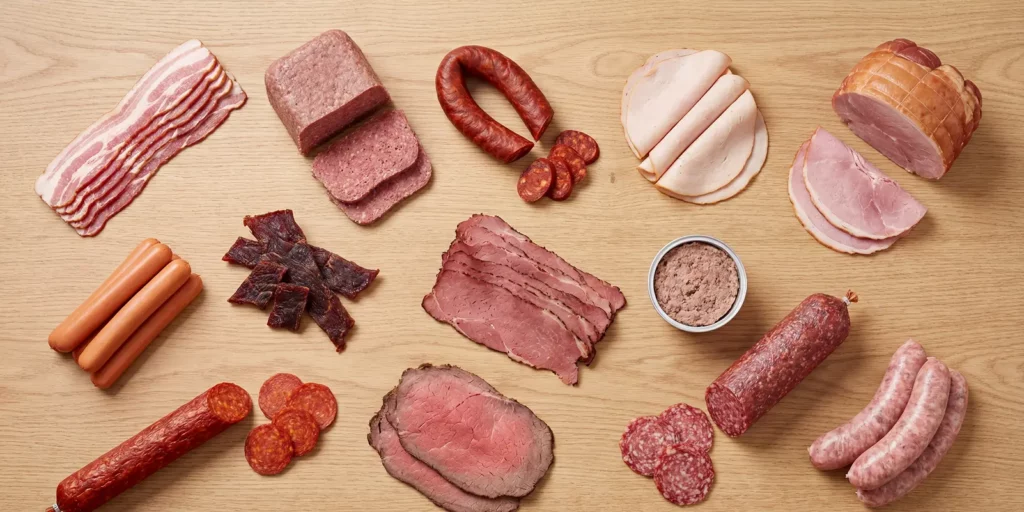
How to spot highly-processed meat on the shelf?
Scan the ingredients list on the product pack for words like “nitrate”, “nitrite”, “cured”, or “salted” to pin down ultra-processed processed meat.
Why Avoid Processed Meat
While juicy and salty, these meats hide some health risks. The World Health Organization classifies processed meat as carcinogenic to humans, with a strong link to bowel and stomach cancer.
When processed, these meats can form harmful compounds like nitrates, nitrites, and other toxic chemicals. These are as cancerogenic to humans as smoking tobacco or inhaling asbestos.
Moreover, processed meat is rich in calories, which can lead to weight gain. Excess body weight, in turn, increases the risks of developing 13 other types of cancer, as well as heart and vascular diseases.
What to Munch Instead
To age well, try to reduce the processed meat portion sizes. Or rotate processed meat meals with chicken, turkey, or white fish.
You can also replicate the taste of your favorite hearty delights with healthier ingredients. Try adding smoked paprika instead of chorizo to your dishes for a richer flavor. Or do a fry-up of mushrooms, tomatoes, and halloumi instead of bacon or sausages.
Read also: How to Identify Ultra-Processed Foods (Even When Labels Mislead You)
2. Sugary Soft Drinks and Energy Drinks
Soft drinks — sodas, iced teas, sports drinks, fruit juices, canned coffee, and energy drinks — are often marketed as “fun” drinks, which helps explain why so many people reach for them daily.
But here’s what often gets missed: most of these drinks count as sugar-sweetened beverages (SSBs). They contain very high doses of added sugars. Even drinks labeled “natural” or “vitamin-enhanced” often fall into this category.
Nationally, 63% of adults drink at least one sugar-sweetened beverage every day. Just one can of soda already exceeds the recommended daily sugar limit for women and nearly does for men. Regular consumption has been linked to higher risks of Type 2 diabetes, heart disease, and liver problems.
Examples of sugar-sweetened beverages (SSBs):
- Carbonated soft drinks, e.g., Coca-Cola, Mountain Dew, Fanta
- Energy drinks, e.g., Red Bull, Monster Energy, Rockstar
- Sports drinks, e.g., BodyArmor Sports Drink, VitaminWater, etc.
- Sweetened fruit drinks, e.g., Capri-Sun, Kool-Aid, Arizona Iced Tea
- Sweetened teas & coffees: Lipton Brisk, Dunkin’ Bottled Iced Coffee, etc.
- Juice blends: Naked Juice Smoothies, Snapple Juice Drinks, etc.
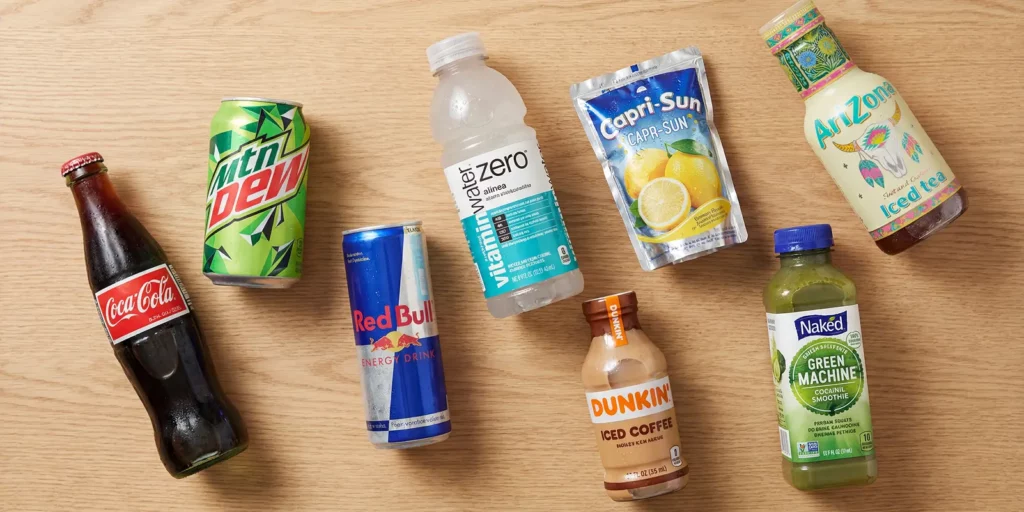
Why Avoid Sugar-Sweetened Beverages
Drinks with excessive natural sugars and artificial sweeteners are notorious for contributing to weight gain by causing changes in metabolism and insulin resistance. Consuming a lot of sugary drinks daily can increase the risk of developing Type 2 diabetes by 41% in kids and adults.
High sugary drink intake is also linked to increased risk of fatty liver, cardiovascular diseases, and dental caries.
How to tell sugar-sweetened beverages on the shelf?
Words like “sucrose (table sugar)”, “fructose”, “high-fructose corn syrup (HFCS)”, “cane sugar”, “cane juice”, “agave nectar”, “molasses”, “maple syrup”, or “brown rice syrup” indicate extra sugars in the can.
How to Stay Better Hydrated
Try to swap one soda drink for a glass of unsweetened cold-brewed tea infusion, a fermented drink like kombucha, or fruit-infused water. All of these offer better hydration and taste great, too.
3. Packaged Sweet Snacks
A snack aisle in any store has loads of colorful, sweet options — cookies, candy bars, donuts, gummies, pastries, and snack cakes. But most of them contain excessive amounts of sugar, just like sugar-sweetened beverages.
Examples of popular packaged sweet snacks:
- Oreo
- Pop tarts
- Snickers
- M&Ms
- Twix
- Kit Kat
- Skittles
- Haribo Goldbears
- Drake’s Cakes
- Entenmann’s Mini Muffins
- Famous Amos Chocolate Chip Cookies
- Kellogg’s Rice Krispies Treats
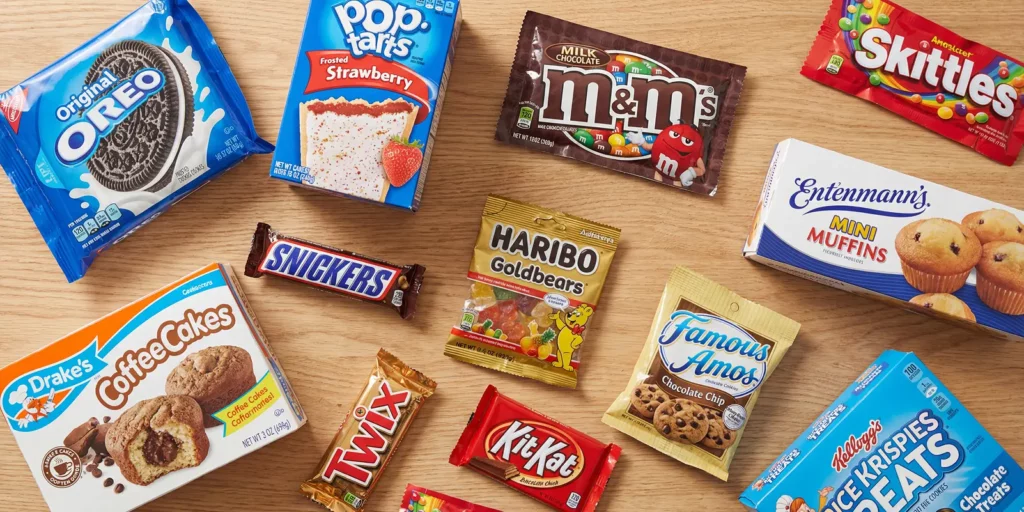
How to choose healthier packaged snacks?
When browsing, look for products with less than 8g/2 tsp of added sugar per serving and at least 3 g of fiber or 3 g of protein per serving.
Why Avoid Packaged Sweet Snacks
Sweet snack foods don’t have many nutrients. Instead, they’re dense with refined flour, emulsifiers, artificial sweeteners, and preservatives. When the body overloads on sugar, chronic inflammation develops in the liver and blood vessels. These excessive fat deposits may eventually contribute to fatty liver disease, Type 2 diabetes, and heart disease.
In a 15-year study among US adults, people who got 17% to 21% of their daily calories from added sugar had a 38% higher risk of dying from cardiovascular disease.
How to Treat Yourself Instead
If you need a quick pick-me-up through the afternoon slump or want to treat your little ones, go for a less sugar-packed alternative like a fresh fruit (or frozen homemade fruit popsicle in the summer!), a Greek yogurt with a bit of fruit and honey, or some crunchy roasted chickpeas.
4. Fast Food Burgers, Nuggets and Breakfast Sandwiches
Fast-food joints can be found on every other block in bigger cities — and are often the only dining out option for miles in rural areas. While convenient and affordable, their food offerings are among the top ultra-processed foods to avoid because of low nutritional value.
A study of almost 1,500 meal combos offered by 34 US fast-food and fast-casual restaurants found that many combo meals exceeded the daily healthy limits for calories, sodium (salt), and saturated fat.
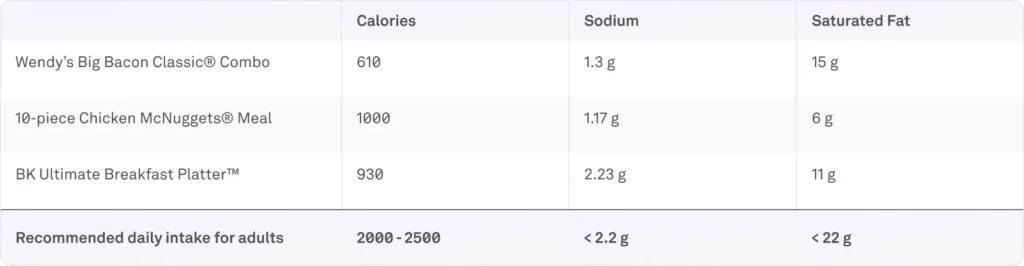
Sources: Wendy’s, McDonald’s, Burger King, Dietary Guidelines for Americans
Why Avoid Fast Food
The high fat, salt, and often sugar content makes fast food craveable. But the same combo is also associated with increased risk for cardiometabolic syndrome.
A cardiometabolic syndrome is a combination of health conditions such as insulin resistance, impaired glucose tolerance, high cholesterol levels (dyslipidemia), high blood pressure (hypertension), and excess fat around the waist (central adiposity).
One-third of adults in the United States have metabolic syndrome.
How to Snack Instead
To get a quick meal, keep a grab-and-go stack of healthier snacks like nut mixes, protein bars with less than 8g added sugars, or whole-grain crackers. And for a full meal, try to go more often for home-cooked from-scratch dishes or healthy meal kits.
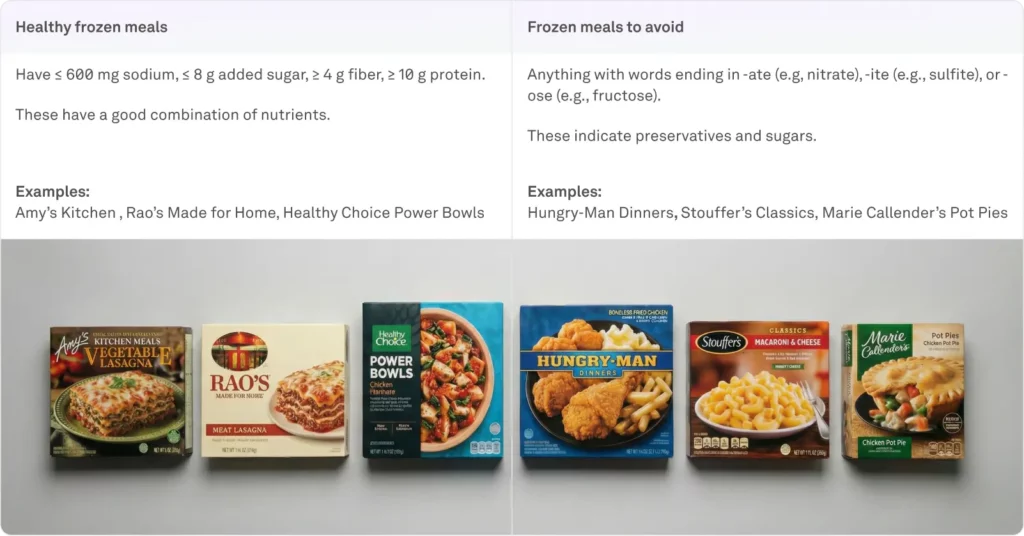
5. Frozen “TV Dinners” and Microwave Meals
Frozen meals are a convenient way to get food on the table fast after a long day. But many of the ready-to-eat dinners are also one of the worst ultra-processed foods in terms of sodium content.
For example, the popular Hungry-Man Roasted Carved White Meat Turkey Meal packs 400 calories, 1,310 mg of sodium, and 14 g (more than a tablespoon) of sugar.
In simpler terms, one TV dinner provides half of your daily dose of sugar and sodium. Pairing it with a sugary drink or a quick treat afterwards can cause spikes in insulin levels and harm the metabolism in the long term.
Why Avoid Microwave Meals
A high-sodium diet has many negative health effects. It has been linked to:
- Water retention, causing swelling, bloating, and puffiness
- High blood pressure conditions
- Increased arterial stiffness
- Heart disease and stroke
Moreover, other preservatives and low-quality fats in TV dinners aren’t doing your body many favours.
How to Choose Better Frozen Products
Not all frozen goods are bad. On the contrary, frozen fruits and veggies can be an affordable way to consume more berries and greens (especially out of season). Likewise, frozen fish and seafood are a great source of lean protein as long as they don’t contain high-sodium additives.
6. Instant Noodles and Boxed Mac & Cheese
Kraft Mac & Cheese is a diner staple for many American families (and an even more beloved dish across the border in Canada!), with one million boxes sold daily. The creamy, gooey taste can feel comforting, but unfortunately, it’s not optimal for your health.
One serving of boxed noodles contains:
- Calories: 259
- Fat: 7.8 g
- Sodium: 567 mg
- Fiber: 1.47 g
- Sugars: 7 g
- Protein: 11.34 g
While you get some good nutrients like proteins, fibers, calcium, and iron, the added sugar and sodium, combined wth other consumed foods, can be too high for a balanced diet.
Other popular instant noodle brands are also overloaded with sodium (up to 1,800 mg sodium per pack!) and added sugars. But even worse, they may contain TBHQ — an unhealthy food preservative.
Why Avoid Some Instant Noodles
Some instant noodle cups contain tert-Butylhydroquinone (TBHQ) — a synthetic antioxidant that prevents food spoilage. New research evidence, however, suggests that long-term exposure to TBHQ at higher doses may cause cell-damaging and cancer-causing mutations
in the human body.
Also, TBHQ-free noodles can still contain high amounts of added sugars and sodium, which don’t support your health.
What to Have Instead
Mix up your selection of noodles with healthier varieties like whole-grain pasta, soba (buckwheat) noodles, instant rice noodles, or quinoa cups. These are often as quick to cook, but don’t come with as many health risks.
7. Sweetened and Flavored Yogurts, “Protein” Dairy Cups
Yogurts are often seen as a healthy treat — and they’re one, if you go for options without loads of added sugars. And these may be hard to find on the shelves.
Even those with “organic” and “natural” labels often contain excessive amounts of added sugar (well above 10 grams per 100-gram serving!).
Thankfully, that’s changing at least for the kids. This year, the Food and Drug Administration updated school nutrition standards. These limit added sugars in yogurt to 12 g per 6 ounces (2 g of added sugars per ounce) and 10 g per 8 fluid ounces for flavored milk.
But as adults, we should also be more mindful about our sweet dairy choices.
Why Avoid Sugary Dairy Products
Apart from high sugar contents, many sweetened yogurts also include artificial flavoring, stabilizers, and gums. Neither of these is particularly good for our health.
Studies have found that ultra-sweet yogurts increase the risk of being overweight and developing metabolic syndrome. The added sugars obtained from such dairy products also contribute to heart, gut, and liver problems.
How to spot added sugar in dairy products?
Look for the label line that says “Includes Xg Added Sugars”. Then scan the ingredients list for sweeteners like cane sugar, honey, agave, or anything ending in “-ose” — such as glucose, sucrose, maltose, or dextrose. These all count as added sugars, even if they sound natural or scientific. No-sugar dairy products offer better nutrients for supporting long-term health.
What to Snack on Instead of Sweet Yogurts
A good alternative is to buy plain Greek yogurts with normal fat contents and top them with some fresh berries or sliced fruits. This way, you’re getting the goodies — calcium, probiotics, and proteins — plus a naturally sweet flavor.
8. Ultra-Processed Bread and Buns
Bread has been a staple in the American diet for hundreds of years. But the simple loaves our ancestors broke, and those available on supermarket shelves, are vastly different in nourishment.
Most packaged breads are ultra-processed. They contain additives such as emulsifiers, vegetable oils, dough conditioners, preservatives, and added sugars or salts to improve their texture and shelf life.

Why Avoid Ultra-Processed Bread
Artificial ingredients in ultra-processed bread reduce its energy density. This makes the bread feel less filling and may prompt overeating, increasing the risk of weight gain and metabolic issues like insulin resistance.
Similar to other ultra-processed foods like instant noodles, frozen diner meals, and burgers, some loaves contain too much salt — up to 584 mg per 100 g.
High emulsifier counts in some breads can also be problematic. They can undermine gut health, increase risks of chronic inflammation and certain types of cancer, according to a large population-based study in France.
What Loaves to Buy Instead
Go for bread with “whole grain” as the first ingredient and/or those with at least 3 g of fiber per slice. The fewer additives and sweeteners, the better. Sourdough and sprouted-grain breads are also good picks. They’re easier to digest and help keep you full longer.
9. Plant-Based Fake Meats
Meat substitutes are made of plants or mushrooms. They’re engineered to look and taste like real meat, but instead contain plant proteins like soy, peas, and wheat gluten, along with artificial flavorings, added fats, industrial seed oils, and sodium.
Popular plant-based meat products include:
- Beyond Meat
- Impossible Meat
- Tofurky Deli Slices
- Pan’s Mushroom Jerky
- Quorn Meatless Patties
- Simulate Spicy Nuggs
- Sweet Earth Benevolent Bacon
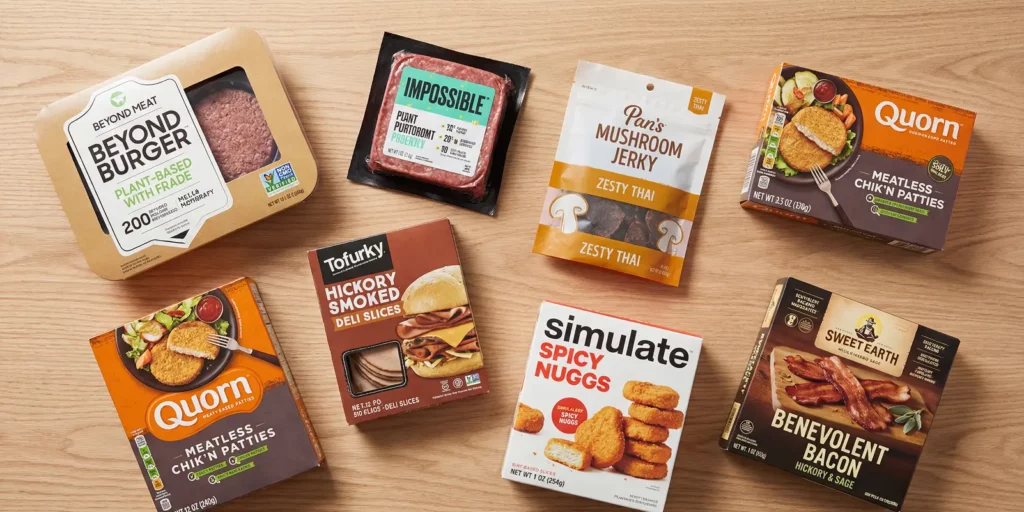
About a quarter of Americans eat plant-based meat at least monthly. Many choose it as a healthier and more ethical alternative to red and processed animal meats. Yet, not all of these patties offer similar health value, despite the glossy marketing claims.
Why Avoid Some Meat Substitutes
A meat substitute is an industrially engineered food. To improve its shelf life and taste profile, some manufacturers overdo it with additives — artificial flavorings, preservatives, salts, and sweeteners.
When analyzing several fake meat products, researchers found that many provide:
- Lower doses of calcium, potassium, magnesium, zinc, and Vitamin B12 than a healthy diet assumes
- Higher saturated fat, sodium, and sugar content than the body needs
Some faux meat products can also be made with liquid smoke flavorings, which have been linked to cancer risks when consumed regularly and in high amounts.
So far, the consensus is that plant-based meats can provide good nutritional value, but could benefit from reduced salt, fat, and sugar content.
How to spot unhealthy plant-based meats?
Watch for long ingredient lists filled with words like “soy protein isolate”, “refined oils”, and “sodium”. Also, compare salt, calories, and saturated fat counts of a meat substitute product vs a chicken or beef patty. If the first has high numbers, it’s not doing your body — or the planet — many favors.
10. Protein Bars, Shakes and Meal Replacement Drinks
Rounding up the list of worst ultra-processed foods are staples, familiar to every sports buff: protein products. Marketed to be “balanced” and “replenishing”, they promise to give a quick nutritional boost after a long workout session.
Examples of popular protein snacks and drinks:
- ALOHA Bars
- Muscle Milk
- KIND Protein
- RXBAR
- Garden of Life Protein Powder
- Clif Builders
- Soylent
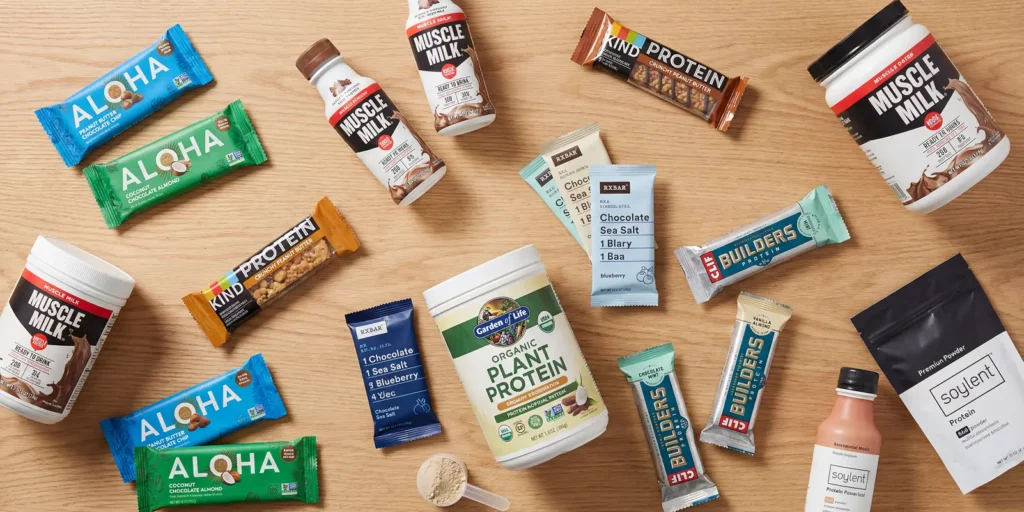
Yet many of these are chock-full of not-so-healthy ingredients like added sugar, calories, or even toxic chemicals.
Why Avoid Meal Replacement Drinks
Because protein powder, added to many of these drinks, is considered a dietary supplement, manufacturers don’t get controlled as heavily by the Food and Drug Administration (FDA). In other words, they can put anything into a “healthy” powder mix or nutrition bar.
A non-profit organization recently analyzed over 200 protein products, sold in the US, and found that:
- Among 70 of the top protein powder brands, 47% contained arsenic, cadmium, lead, and mercury in doses that exceeded at least one federal or state regulatory limit for product safety.
- Among 165 of the top-selling snack and nutrition bars, 97% exceeded safe doses of acrylamide – a chemical linked to health issues in the nervous and reproductive systems.
So while these products may look like a quick fix for nutrition, what’s really inside could do more harm than good.
What to Snack On Instead
If you need some extra healthy “fuel”, especially post-workout, go for a whole-food snack. Greek yogurt with fruit, a handful of nuts, or hummus with veggie sticks offer a better balance of protein, fiber, and healthy fats. So you stay full longer and avoid unhealthy additives.
Why We Don’t Hear About These Dangers Enough
Until recently, the powerful food lobbies have framed many of the ultra-processed foods as part of the “balanced American diet”.
Think breakfast cereals, heavily marketed to our parents’ generation and us, as kids. Or plant-based meats and protein shakes that Instagram makes us believe are healthy.
With little supervision over labels, brands can make claims like “heart healthy,” “whole grain,” or “low fat” even if their products are anything but that. Terms like “natural flavors” or “made with real fruit” can disguise a mix of chemicals and sweeteners that have little to do with what nature intended. So, no wonder many consumers are confused.
The better news? Awareness is power. The more you read labels, the harder it becomes to fall for clever marketing.
Choose products with short ingredient lists you can actually pronounce. Swap one packaged food item for a whole-food alternative each week.
These simple changes, repeated over time, can quietly transform your health for the better.
This article is for educational purposes only and does not constitute medical advice. Individual nutritional needs vary. Please consult a qualified healthcare professional for personalized guidance.